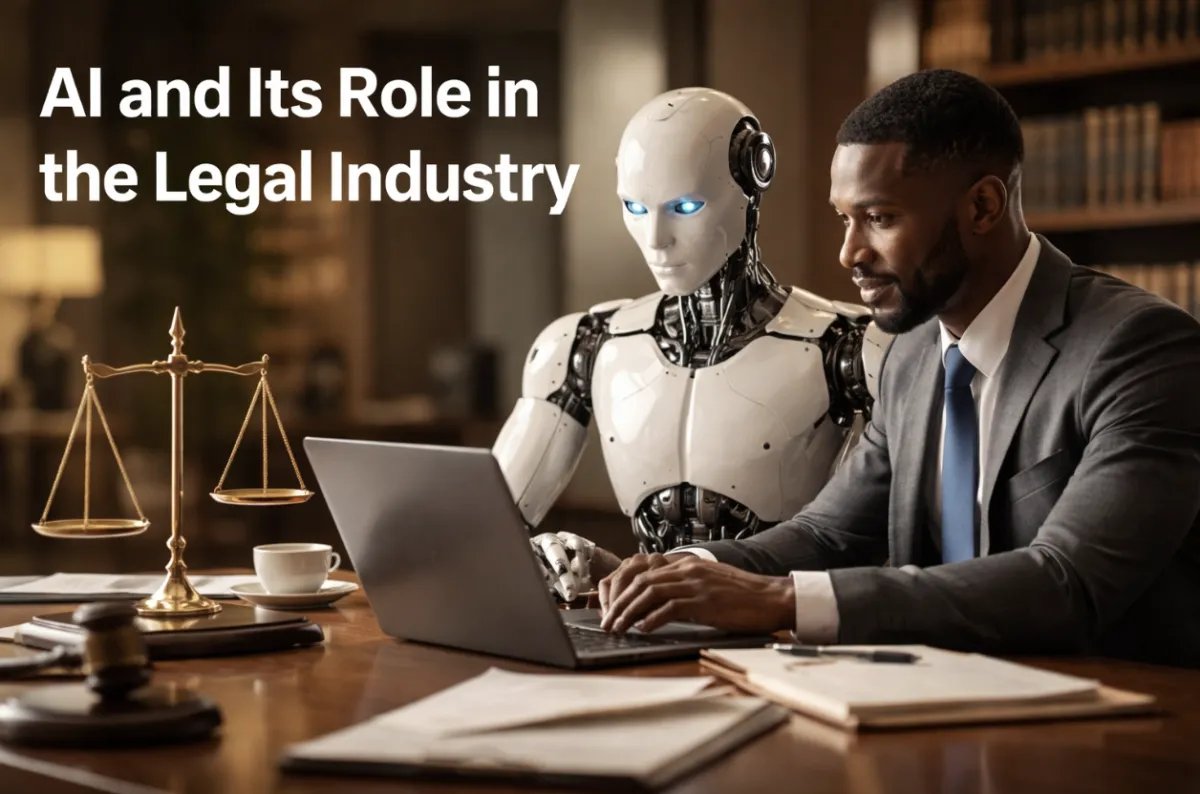
AI and it's role in the Legal Industry
"The question isn't whether AI will change the legal profession. It's whether you'll be ready when it does."
If you're a law student right now, you've probably heard this a thousand times: AI is coming for your job. Cue the dramatic music and existential dread.
But here's the thing, that's not quite the full picture.
Yes, AI is transforming legal practice at a pace that would make your head spin. But it's not replacing lawyers. It's reshaping what it means to be one. And if you understand how to work alongside these tools, while knowing exactly where they fall short, you'll have a serious edge over everyone else scrambling to catch up.
Let's dive in.
The New Reality for Junior Lawyers
Picture this: you're a freshly qualified solicitor, and your supervisor hands you 50,000 documents to review before Tuesday,
A few years ago? You'd cancel your weekend plans, stockpile coffee, and prepare to question every life choice that led you here.
Today? AI-powered document review can process millions of documents in a single day.
What does this mean for you?
It means the grunt work is shrinking. The hours spent on repetitive, low-level tasks, document review, and first-draft contracts, are being compressed dramatically.
One law firm reported that a task that used to take associates 16 hours now takes 3-4 minutes. That's not a typo. Minutes.
Where AI Is Making Waves
Let's break down the key areas where AI is genuinely transforming legal practice:
1. Legal Research
Tools like Westlaw and LexisNexis have been incorporating AI for years. But the latest iterations can produce relevant resources in seconds. No more trawling through endless databases hoping you haven't missed something crucial.
2. Contract Review and Analysis
AI platforms can now scan contracts to highlight missing clauses, flag potential risks, and check for regulatory compliance. What used to take hours now takes minutes. Some systems can identify and organise contract information into neat graphs, tables, and reports.
3. Document Drafting
Generative AI can now produce first drafts of contracts and other legal documents. You still need to review and refine them (more on that in a moment), but the initial heavy lifting? Sorted.
So... Should You Be Worried?
Here's where it gets interesting.
AI is brilliant at processing data, spotting patterns, and churning out drafts at superhuman speed. But there's a catch.
It can't think.
AI doesn't understand context the way you do. It doesn't grasp the nuances of a client's commercial priorities. It can't read the room during a negotiation or pivot your argument when a judge raises an unexpected point.
And, crucially, it sometimes makes things up.
You've probably heard the horror stories of lawyers citing AI-generated cases that literally don't exist. AI "hallucinations" are real, and if you blindly trust the output without checking, you're playing a dangerous game.
This is where the human skills become non-negotiable.
Strategy. Ethical judgment. Critical thinking. The ability to challenge what's in front of you rather than accepting it at face value.
Why Commercial Awareness Matters More Than Ever
Here's a phrase that's probably heard in many vacation scheme or pupillage interviews: commercial awareness.
It often gets reduced to "read the Financial Times" or "know what's happening in the markets." And yes, those things matter. But in the age of AI, commercial awareness takes on a whole new dimension.
Being commercially aware now means understanding:
How AI tools can serve your client's business goals, not just the legal issues
Where AI findings fit within the broader regulatory landscape
When to trust the technology and when to question it
How efficiency gains translate into value for your client (and your firm)
Think about it this way: AI can spit out a contract analysis in minutes. But can it tell you whether that contract actually aligns with your client's strategic objectives? Can it weigh up the commercial risks versus the legal ones? Can it advise whether pushing back on a particular clause might damage a crucial business relationship?
Not a chance.
That's your job.
The lawyers who thrive in this new landscape won't just be technically competent. They'll understand the business of law. They'll know how to use AI as a tool, not a crutch, and they'll spot its limitations before those limitations become costly mistakes.
This Is Where the Commercial Awareness Club Comes In
If you want to stay relevant in a world where AI can summarise a sector in seconds, you need more than information. You need judgment.
That’s exactly what our Commercial Awareness Club is built for: monthly insights, case studies, and discussions that train you to interpret what the data means for clients, deals, and strategy.
AI is great at giving you outputs. But it can’t reliably tell you:
Which detail actually matters to a client’s decision this week
What the commercial trade-off is between “legally perfect” and “commercially workable”
How a market shift changes the risk appetite behind a negotiation
Where the headline is misleading (and where the boring footnote is the real story)
In the Club, you practise doing the bit that makes you valuable: connecting law to business reality, asking better questions, and pressure-testing assumptions before you walk into an interview or a seat.
If that sounds like what you’re missing right now, join the Commercial Awareness Club.
The Bottom Line
AI isn't the enemy. It's a tool, a powerful one, that's here to stay.
The lawyers who succeed in the next decade won't be the ones who ignore AI or fear it. They'll be the ones who master it while doubling down on the human skills that machines can't touch.
So yes, learn how to use the AI tools. Understand what they can do. But never forget what they can't do.
And if you want to build the skills that truly set you apart, don’t just collect more headlines. Build the habit of thinking commercially. That’s what the Commercial Awareness Club is for: monthly insights, case studies, and discussions that help you turn AI-fed information into real-world legal judgment.
Because when a partner (or an interviewer) asks, “So what does this mean for the client?” there’s no chatbot that can bluff it for you.
Just you, your reasoning, and your ability to make sense of the bigger picture.


