The Milk Wars: Why Oatly Just Lost Big in the Supreme Court
“It’s not milk. It’s just juice, isn’t it?”
That’s essentially what Oatly argued.
And this week, the UK Supreme Court said no.
On 11 February 2026, the Supreme Court unanimously ruled against Oatly in Dairy UK Ltd v Oatly AB, holding that the slogan “POST MILK GENERATION” could not be registered as a trademark for oat-based food and drink products. The decision is a significant win for Dairy UK and a reminder that however creative your branding may be, statutory regulation still sets the boundaries.
If you're a law student preparing for commercial pupillage or training contract interviews, this case is a gift. It combines trademark law, statutory interpretation, retained EU law and commercial branding strategy - all wrapped up in a brand everyone recognises.
Let’s unpack it.
What Actually Happened?
Oatly, the Swedish oat-based drinks company known for its bold and irreverent marketing, applied to register “POST MILK GENERATION” as a UK trademark. The mark was intended to capture the idea of a new generation moving away from dairy milk and towards plant-based alternatives.
The trademark was registered in 2021 for various goods, including oat-based food and drink products.
Dairy UK, the trade body representing British dairy farmers and producers, challenged the registration. Their argument relied on EU Regulation 1308/2013 - retained in UK law post-Brexit - which protects dairy terms such as “milk”, “butter” and “cream”. Under that regulation, those terms are reserved for products derived from animal milk.
Oatly’s position was that “POST MILK GENERATION” was simply a slogan. It was not being used as the name of a product. They argued that the prohibition in the regulation applies to product designations, not to broader branding or marketing phrases.
The Supreme Court disagreed.
The Legal Battleground: What Is a “Designation”?
The case turned on the meaning of one word: “designation”.
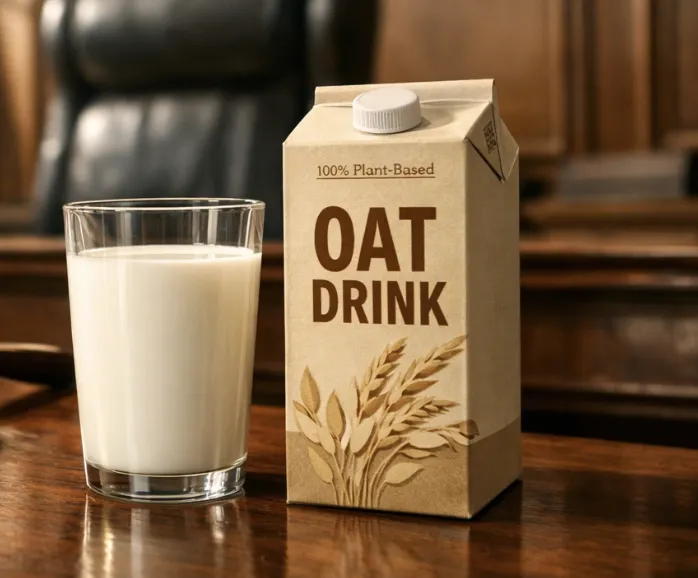
The regulation prevents the use of protected dairy terms as a “designation” for non-dairy products. Oatly argued that “designation” should be interpreted narrowly - as the formal name or description of the product itself. In other words, if they called the product “Oat Drink”, the slogan on the side of the carton should not matter.
The Supreme Court adopted a broader interpretation. It held that “designation” includes the use of a protected term in connection with a product, even where that use appears in branding or a slogan rather than as the literal product name.
That distinction is critical. It means that businesses cannot avoid regulatory restrictions simply by shifting a protected term from the product label into the wider brand messaging.
The “Characteristic Quality” Exception
Oatly also relied on an exception within the regulation. This allows protected terms to be used where they “clearly describe a characteristic quality of the product.”
Oatly argued that “POST MILK GENERATION” reflected the nature of their product; a drink intended for consumers moving beyond dairy milk.
The Supreme Court rejected that argument. The phrase did not clearly describe the product’s characteristics. It described a group of consumers. It was aspirational and brand-focused rather than descriptive of what was actually in the carton.
As a result, the exception did not apply.
The trademark registration was therefore invalid for the oat-based food and drink categories. Importantly, the decision does not affect the registration in respect of unrelated goods such as merchandise. The prohibition operates within the regulated product classes.
Why This Matters Commercially
This case is not about whether plant-based products can exist, or whether consumers understand what oat milk is. It is about how strictly courts will interpret regulatory protections for reserved terms.
There are three commercial takeaways.
First, retained EU law continues to shape UK regulatory frameworks. Post-Brexit does not mean post-regulation. Businesses operating in food, agriculture and consumer goods need to understand that these frameworks remain firmly in place.
Second, trademark strategy cannot be divorced from sector-specific regulation. You may secure registration at first instance, but that does not guarantee survival on challenge if statutory prohibitions apply.
Third, branding creativity has limits. Oatly’s brand identity is built on bold, provocative messaging. That approach has driven enormous commercial success. But when statutory language is engaged, clever marketing will not override legislative intent.
What Aspiring Lawyers Should Take Away
For law students, this case is a reminder that statutory interpretation can have enormous commercial consequences. The entire dispute turned on the scope of a single word, “designation” and the application of a narrow exception.
It also shows how intellectual property law interacts with regulatory regimes. Trademark rights do not exist in isolation. They operate within broader statutory frameworks that may restrict what can be registered or enforced.
Most importantly, it highlights the balance between legal compliance and commercial ambition. Businesses push boundaries. Lawyers define where those boundaries sit.
And sometimes, the line is drawn more firmly than expected.
If you want to build the confidence to analyse cases like this properly - not just understand what happened, but explain why it matters commercially - our Commercial Awareness Club is designed for exactly that. Each month we break down real developments affecting law firms and businesses, run practical exercises, and help you develop the structured thinking that interview panels are looking for.
Because commercial awareness isn’t about reading headlines. It’s about understanding impact.


