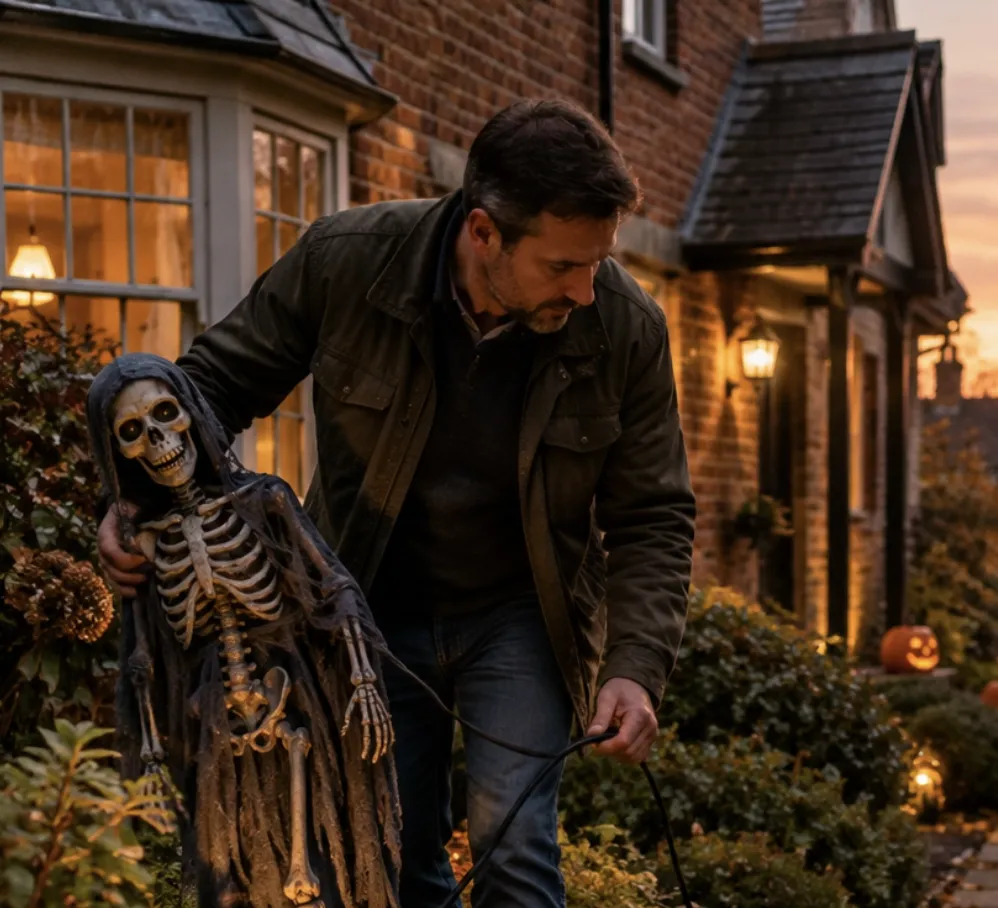
Is Trick-or-Treating Actually Legal? Halloween Law in the UK (And What It Teaches You About Legal Analysis)
Halloween arrives this Saturday, bringing pumpkins, costumes and the annual question: can you actually get into legal trouble for asking a stranger for sweets?
There is no special Halloween law book. But a few familiar October activities offer useful examples of how legal analysis works: identify the rule, check its elements, then apply it to the facts. That is just as useful when you are preparing for an interview or mooting as when you are deciding whether that garden decoration looks safe.
Is trick-or-treating illegal?
No. There is no UK-wide Halloween Act, general legal curfew or statutory age limit for trick-or-treating. Asking for sweets is not, by itself, illegal.
In England and Wales, approaching a front door to knock will normally depend on the householder’s implied permission to use the path for that ordinary purpose. A clear “no trick-or-treaters” sign or a direct request not to call can withdraw that permission. Trespass itself is generally a civil matter, not a criminal offence, so a child knocking at the door does not automatically become a criminal trespasser. The Crown Prosecution Service (CPS) guidance on trespass explains the distinction; the Open University’s Halloween explainer explores the custom’s history.
If someone is asked to leave and refuses, or comes back repeatedly, the situation may become more serious. But refusal alone does not turn ordinary trespass into a general criminal offence. What happens next depends on the conduct and the circumstances.
When can repeated knocking become harassment?
One ordinary knock is usually a long way from harassment. Under the Protection from Harassment Act 1997, harassment generally requires a “course of conduct”. Where it is directed at one person, that normally means conduct on at least two occasions. The Act describes harassment as including conduct that causes alarm or distress.
Repeatedly returning to one home after being told to stop, or persistently ringing, banging or shouting at a particular resident, could change the analysis. It is the pattern and context that matter, not the fact that it happens on Halloween.
Does the “trick” excuse throwing eggs or flour?
No. Halloween is not a defence to damaging someone’s property. Throwing eggs or flour may amount to criminal damage and may also lead to complaints about anti-social behaviour. Threats and intimidation are treated seriously too, whatever the date.
The point is not that every messy prank automatically amounts to a crime. It is that “it was a joke” does not settle the legal question. The Criminal Damage Act 1971 focuses on whether property belonging to another was destroyed or damaged and on the person’s state of mind, including whether they intended or were reckless as to damage.
Who is responsible if a Halloween visitor gets hurt?
It depends on the premises, the visitor’s status and what caused the injury. In England and Wales, the Occupiers’ Liability Act 1957 concerns lawful visitors. It requires occupiers to take reasonable care to see that visitors are reasonably safe for the purposes for which they are invited or permitted to be there.
The Occupiers’ Liability Act 1984 deals with certain people who are not visitors, including some trespassers. The duty is more limited and depends on specific statutory conditions. It does not mean that an occupier is responsible for every injury on their land.
A spooky path is one thing. A hidden obstacle that visitors are likely to trip over is another. A visitor’s own conduct may also matter when responsibility is assessed.
Are children’s Halloween costumes covered by safety law?
Often, yes. Children’s fancy-dress costumes intended for play are generally treated as toys under the Toys (Safety) Regulations 2011, although the legal classification depends on the product and its intended use. The rules include safety requirements such as flammability standards.
If a costume is defective or unsafe, the Consumer Rights Act 2015 may give you rights against the seller, depending on the facts.
Can you set off fireworks on Halloween?
Fireworks are regulated, and the rules vary across the UK. In England and Wales, adults can buy category 2 and 3 fireworks, while category 4 fireworks are for professionals. It is against the law to set off or throw fireworks, including sparklers, in a street or other public place. The usual night-time restriction is 11pm to 7am; Halloween is not one of the listed occasions with an extended deadline. See GOV.UK’s fireworks guidance and the Fireworks Regulations 2004.
Is ghost hunting in an abandoned building just trespass?
Entering private land without permission may be trespass, which is generally a civil matter in England and Wales. But it is not a free pass to break in or take things. Breaking a window or lock may amount to criminal damage. Taking property may be theft, and entering a building as a trespasser with the relevant intent or going on to commit certain further offences may amount to burglary under the Theft Act 1968.
Some places have specific rules. Railway property, for example, is covered by legislation that can make certain forms of trespass criminal; the CPS lists relevant railway offences in its trespass guidance.
Conclusion
Halloween is a playful setting for serious habits of thought. Identify the legal test and apply it carefully to the facts. Those habits help with interviews and mooting, and with understanding the practical risks and decisions clients face.
If you would like to practise advocacy, public speaking and commercial awareness in a supportive setting, visit the Legal Skills Academy.
Have a fun and safe Halloween!


